Concrete Contractors Portland, OR
Licensed Concrete Construction Company Near Portland, OR
Rosewood Concrete pours, finishes, and repairs concrete flatwork and structural concrete across Portland, Oregon. This page covers what we build, how we build it, what Portland's rain and soil do to concrete, which permits your project triggers, and what the finished work costs in time and money.
Portland's downtown gauge averages 44.07 inches of precipitation a year, and December alone averages 7.35 inches, so every slab we place gets a compacted crushed-rock base, an air-entrained mix, and a jointing plan built for saturated ground.
We hold an active Oregon CCB license, carry general liability and workers' compensation coverage, and pull PBOT and BES permits before the first form board goes down.
What Rosewood Concrete Builds in Portland
We build eight categories of concrete work for Portland homeowners, property managers, and general contractors. Each category gets a different mix design and a different finish.
Driveways
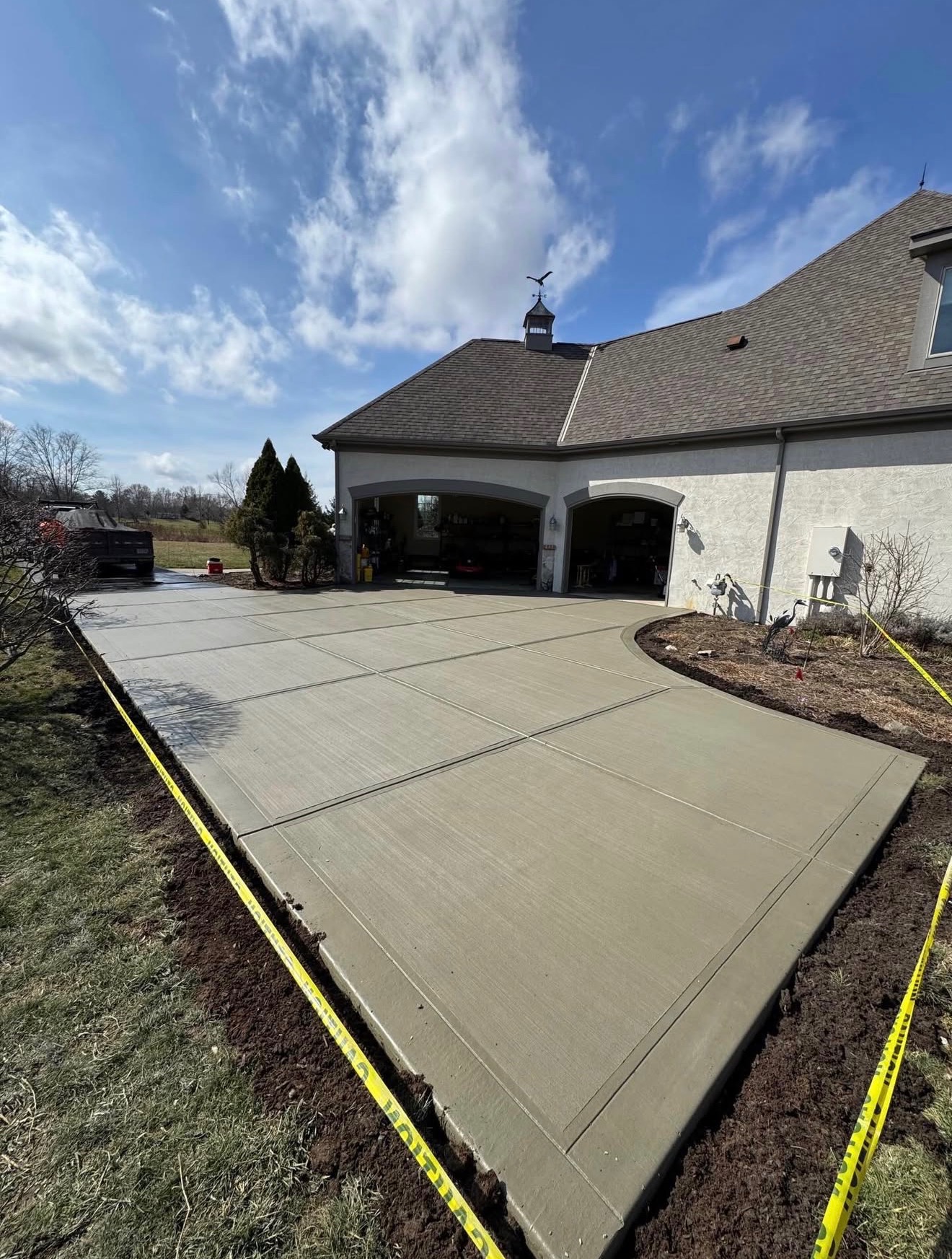
4-inch minimum slab over 4 inches of compacted 3/4-inch-minus rock, broom finished for wet-weather traction.
Patios
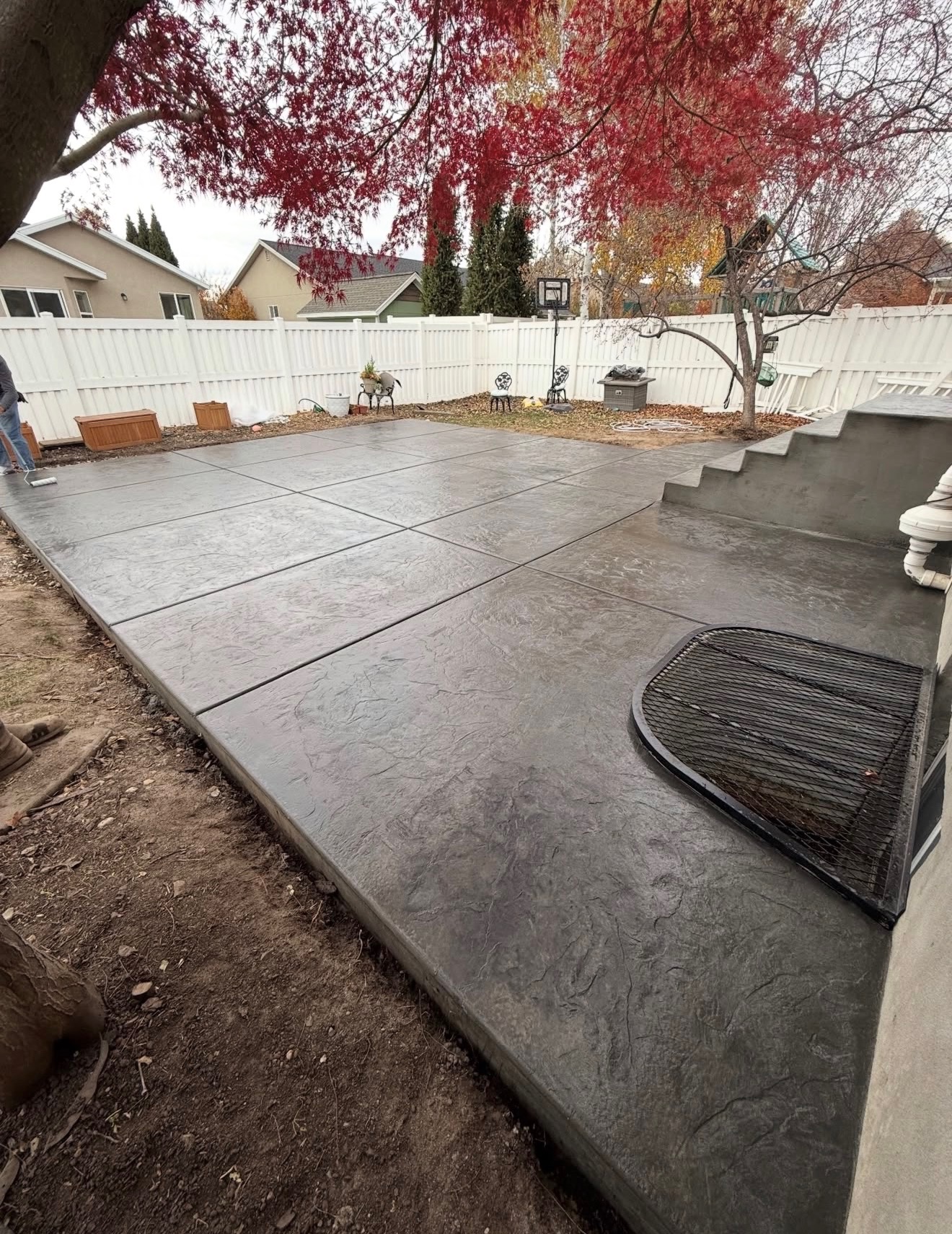
Stamped, exposed aggregate, or salt finish, chosen for shade and how fast moss returns.
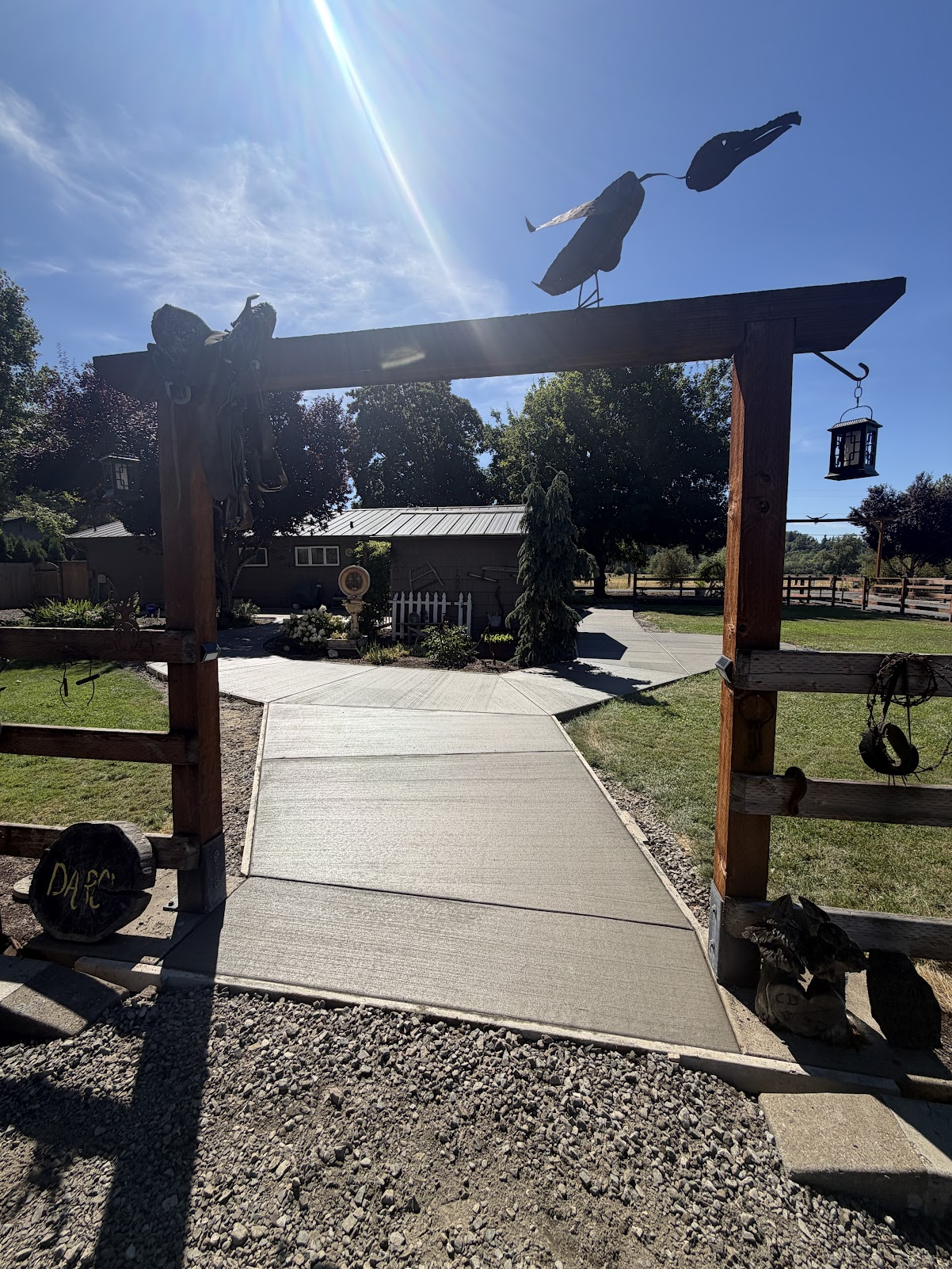
Walkways
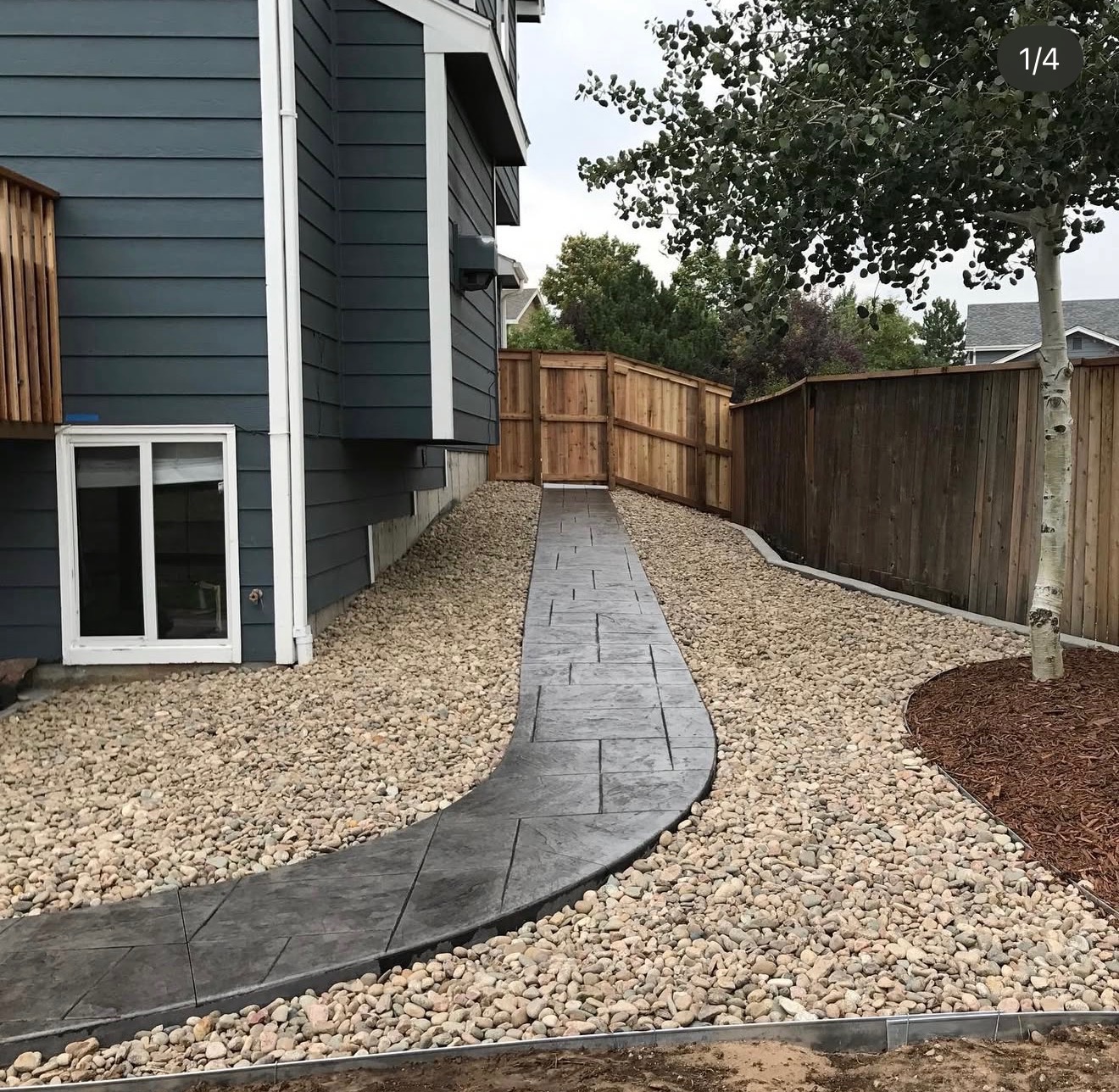
Jointed panels laid out close to square, isolated from foundations and posts.
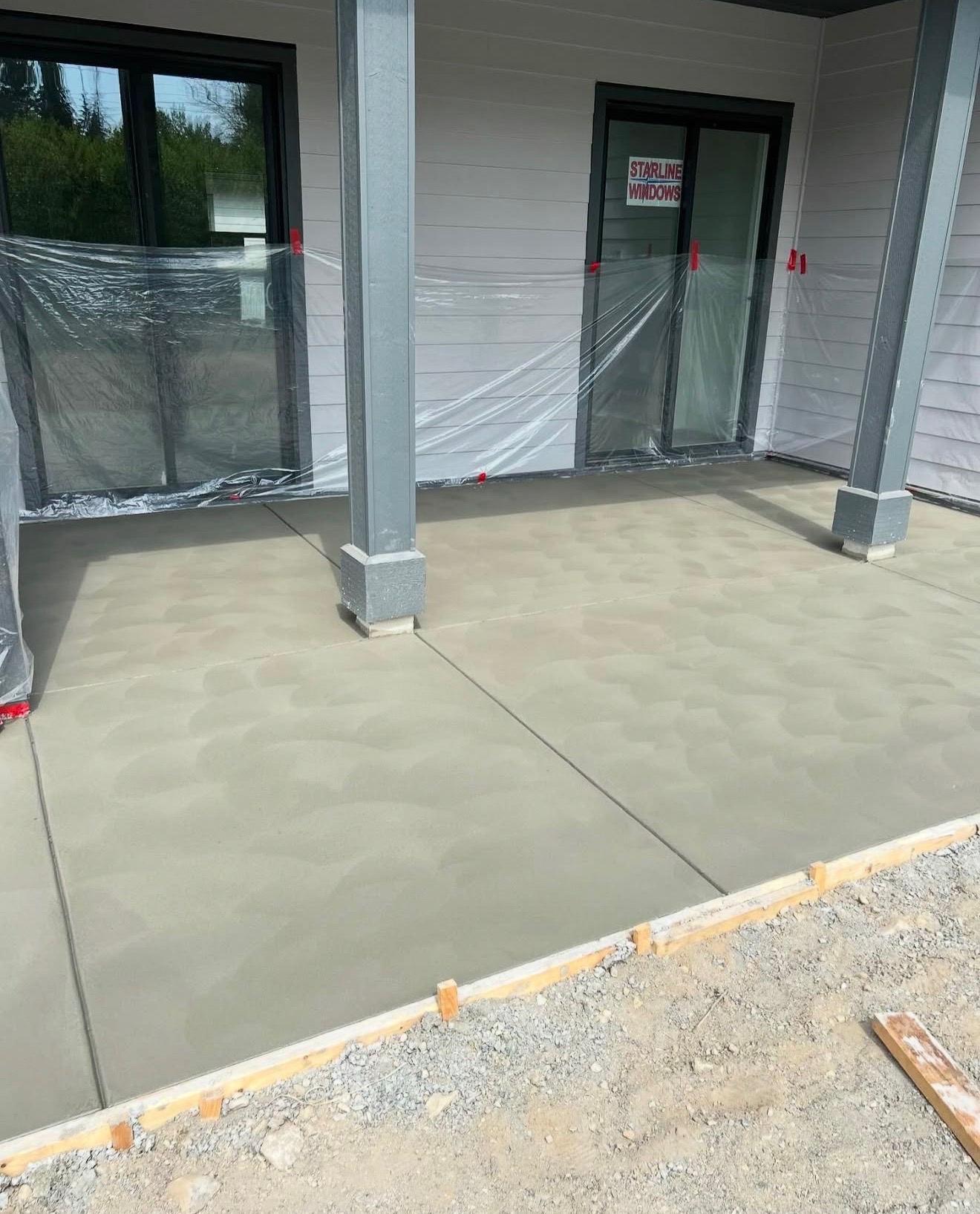
Garage slabs
Steel-troweled smooth, because they stay dry and take equipment loads.
Foundations & stem walls
Rebar sized to the Oregon Residential Specialty Code, inspected before the pour.
Sidewalks & curb cuts
Right-of-way work permitted through PBOT and closed out with a final inspection.
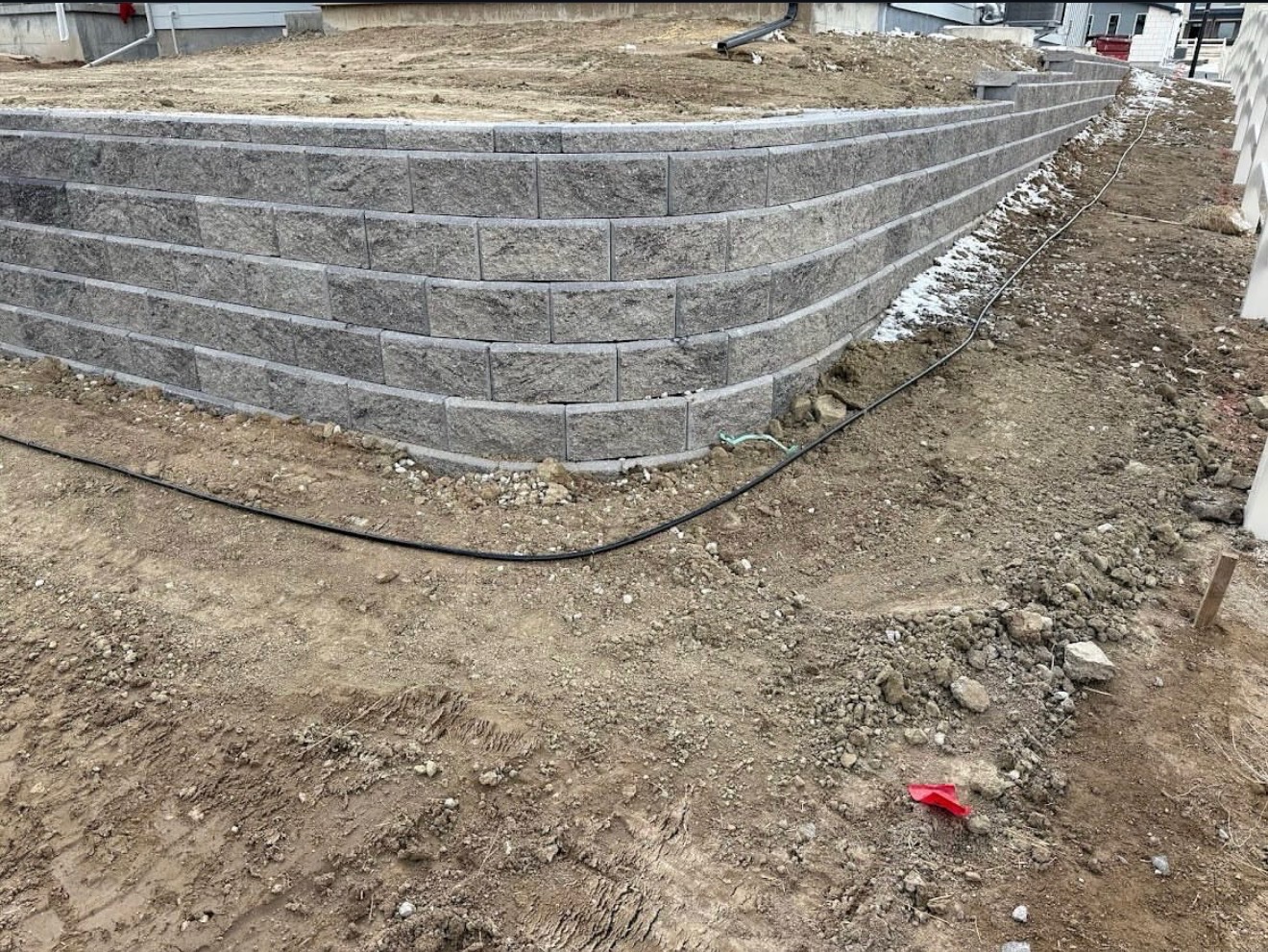
Retaining walls
Walls over 4 feet generally take engineered plans and a building permit.
Structural footings
Sized to load and bearing soil, formed and tied before inspection.
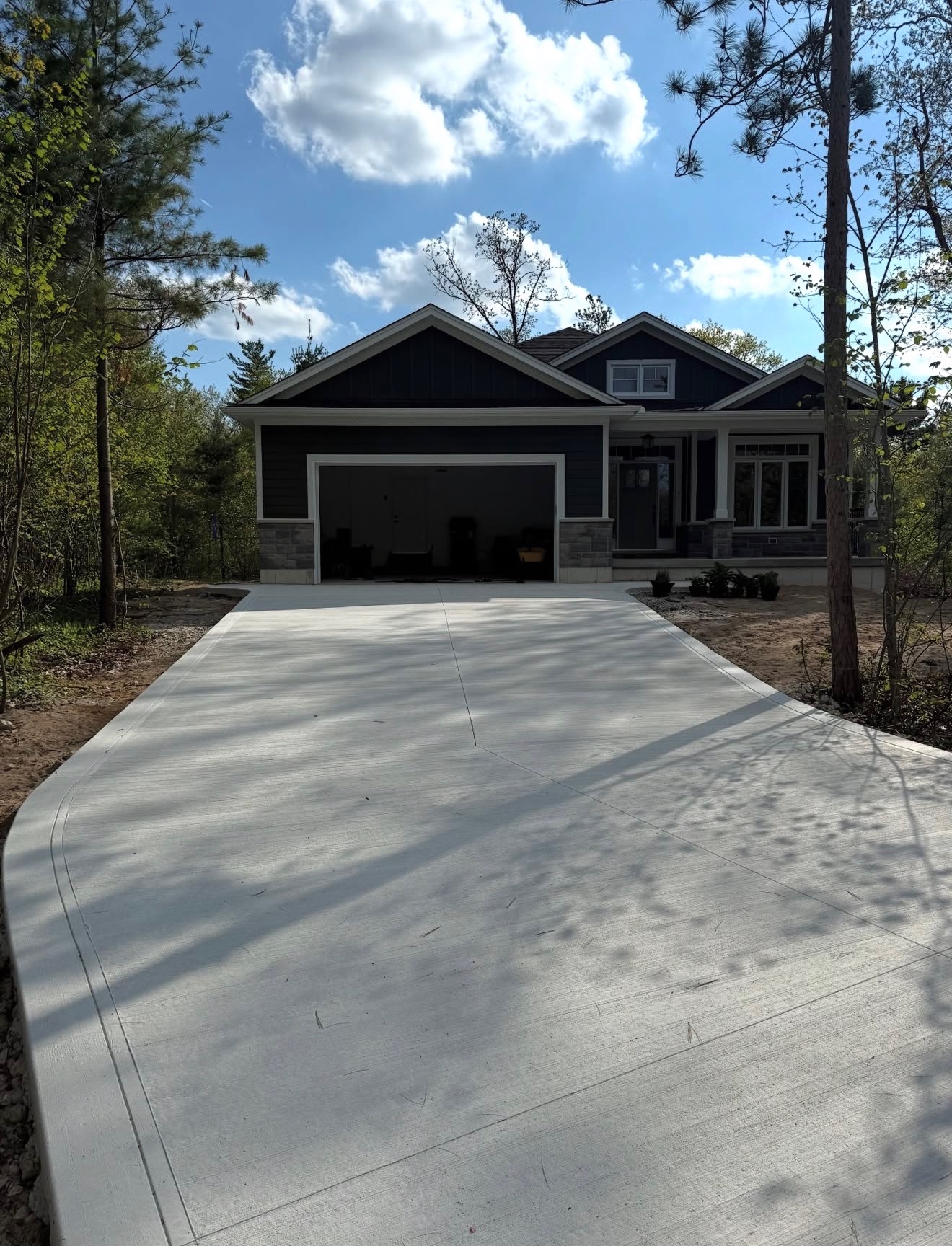
Driveways in Laurelhurst and Alameda take a 4-inch minimum slab over 4 inches of compacted 3/4-inch-minus crushed rock, broom textured for wet-weather traction.
Garage slabs get a smoother steel-troweled surface because they stay dry. Patios in Sellwood and Hawthorne backyards take stamped, exposed aggregate, or salt-finish treatments, depending on shade and how fast moss returns.
Foundations and stem walls take rebar sized to the Oregon Residential Specialty Code and an inspection from Portland Permitting & Development before the pour.
Here is why the category matters more than the square footage: a patio that never carries a vehicle can run 4 inches thick with fiber reinforcement, while a driveway apron that takes a delivery truck needs 5 to 6 inches with #4 rebar on 18-inch centers. We size the slab to the load, not to a default.
Why Concrete Fails Early in Portland, and What We Do Differently
Concrete fails early in Portland for three reasons: saturated subgrade, freeze-thaw scaling, and joints cut in the wrong places. Let's break it down.
Saturated subgrade
Portland's wet season runs October through March, and December normals downtown hit 7.35 inches. Water-logged native soil loses bearing capacity, and a slab poured on Willamette silt or the tight clay through East Portland and Lents settles unevenly the first winter. We excavate to firm subgrade, lay 4 to 6 inches of 3/4-inch-minus crushed rock, and compact it in lifts until it stops moving under a probe rod, so the base drains sideways instead of trapping water under the slab.
Freeze-thaw scaling
Portland averages 3.6 inches of snow downtown, and the West Hills, Sylvan, and Council Crest see freezing nights lower elevations skip. Water in surface pores freezes, expands, and pops the top layer off. The NRMCA calls for air-entrained concrete on exterior slabs, with 3,500 psi for freeze-thaw and 4,000 psi where deicers reach the surface. We spec air-entrained 4,000 psi on driveways and aprons, and hand every client a first-winter care sheet: sand for traction, no calcium chloride, no sodium chloride.
Joints in the wrong places
Concrete cracks. Control joints decide where. Field practice puts joints at roughly 2 to 3 times the slab thickness in feet, so a 4-inch slab gets joints every 8 to 12 feet, cut deep enough to create a real weak plane. We lay out joint panels close to square before the pour, saw-cut the same day the slab sets, and isolate the slab from house foundations, garage stem walls, and light posts with expansion material.
Our Pour Process, Step by Step
Rosewood Concrete runs a seven-step process on every Portland pour, from site walk to final cure.
- 01
Site walk and measure
We measure the area, check drainage fall, locate the sewer lateral and water service, and note tree roots. Portland street trees carry their own rules, and PBOT requires a City Forester inspection before roots are cut for sidewalk repair.
- 02
Permit check and application
We identify whether the work sits on private property or in the public right-of-way, then file the correct application before scheduling.
- 03
Demolition and haul-off
We saw-cut the existing slab, break it out, and haul debris to a Metro-authorized transfer station or a local concrete recycler.
- 04
Excavation and base
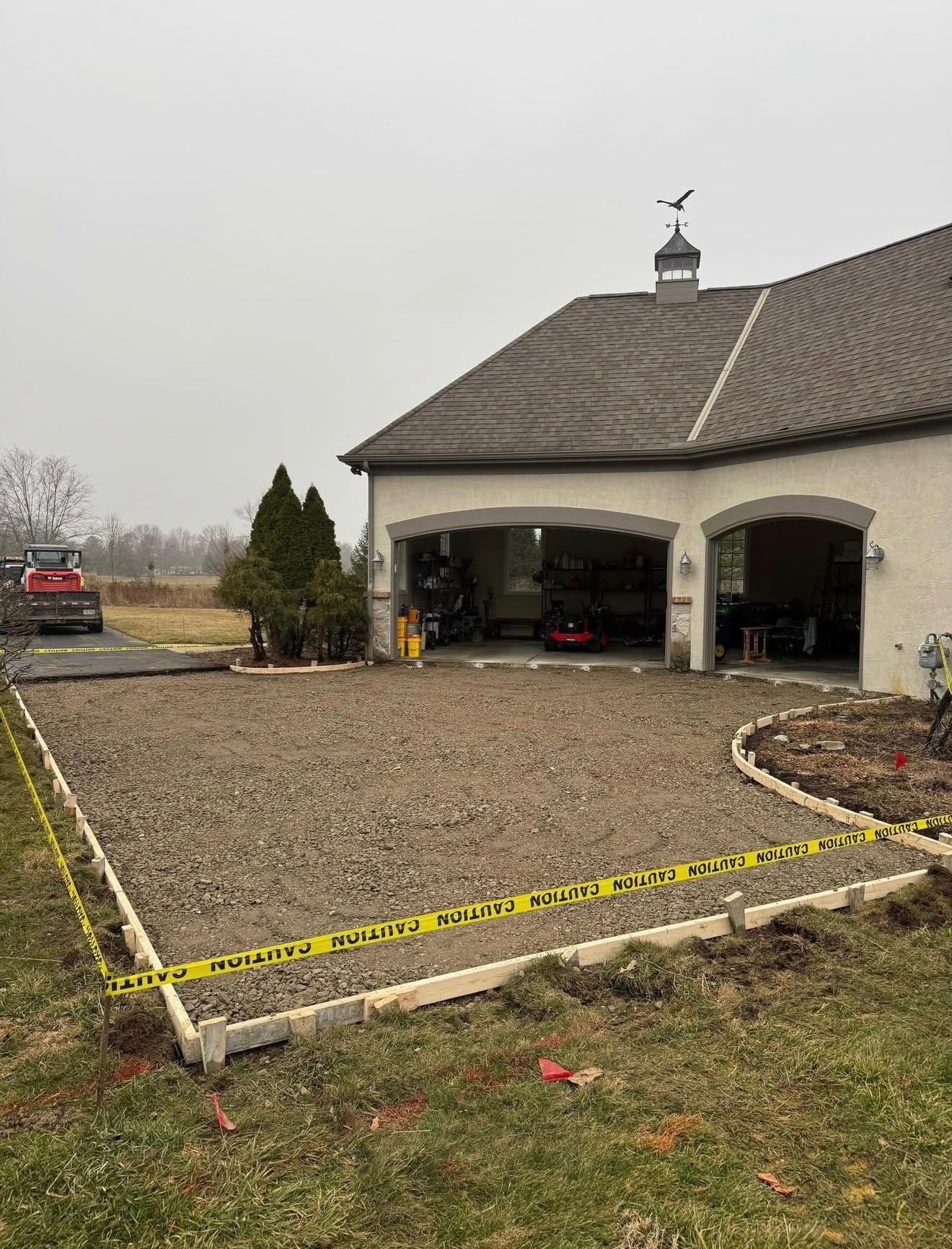
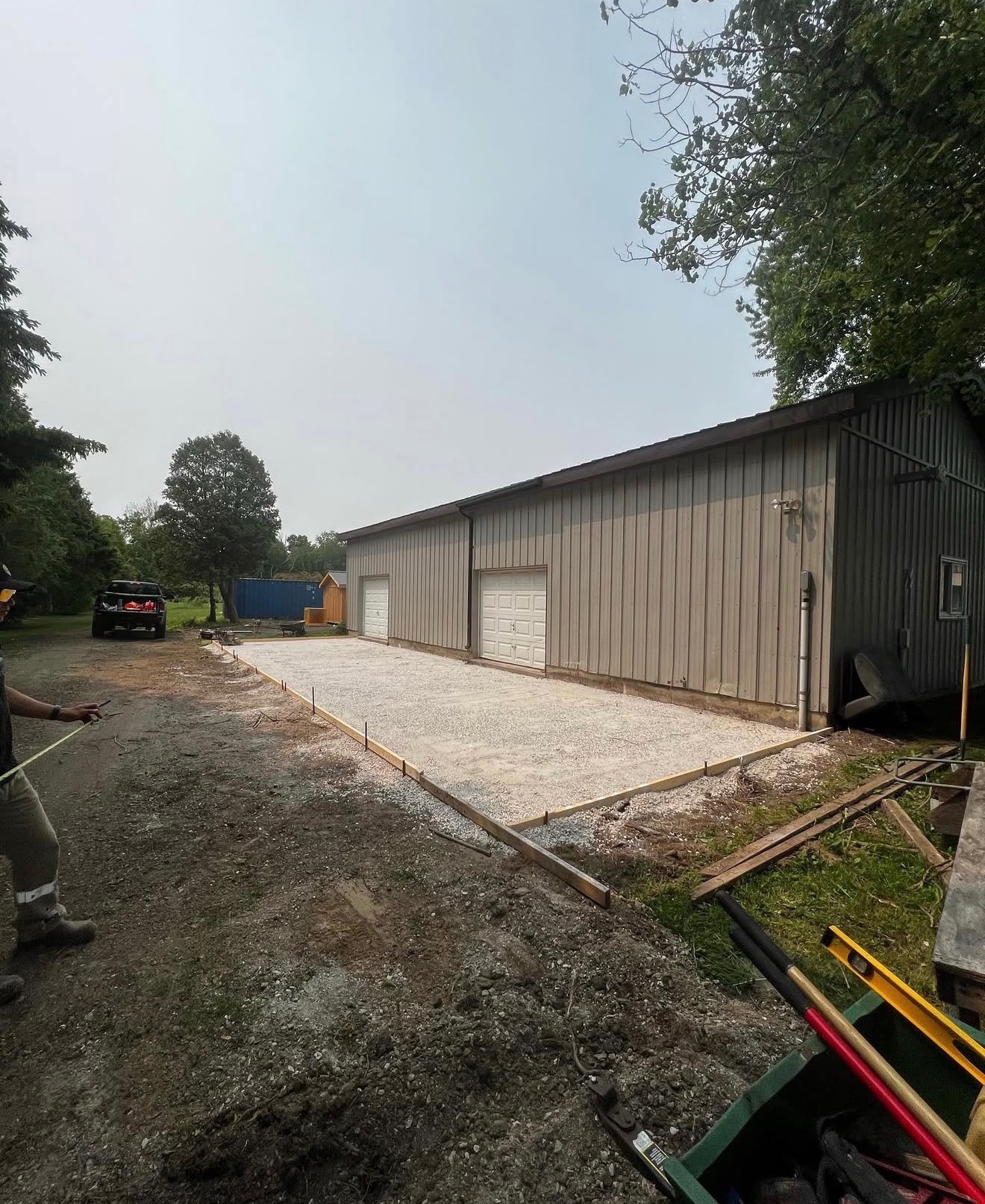
We dig to firm subgrade, place 3/4-inch-minus crushed rock, and compact in 2-inch lifts.
- 05
Forming and reinforcement
Forms set to a minimum 1/8-inch-per-foot fall away from the house, then rebar tied or fiber-reinforced mix specified depending on the load.
- 06
Pour, screed, finish
Ready-mix arrives on a scheduled window. We screed, bull float, edge, cut joints, and apply the specified finish: broom, exposed aggregate, stamp, or trowel.
- 07
Cure and protect
We apply a curing compound or wet-cure under plastic, keep traffic off for 7 days, and hold vehicles off driveways for 10 to 14 days while the mix approaches design strength.
Next steps after the pour
We return for a post-cure walkthrough once the slab has fully set, seal the surface where the finish calls for it, and log the mix ticket and joint layout in your project file.
Portland Permits, Codes, and Stormwater Rules
Concrete work in Portland's public right-of-way requires a Minor Improvement Permit (MIP) from the Portland Bureau of Transportation. That covers sidewalks, curbs, driveway aprons, and driveway ramps between the curb and your property line.
Portland's City Charter, Article 4, Section 9-407, makes the adjacent property owner responsible for maintaining the sidewalk and frontage. When PBOT inspectors issue a Sidewalk Repair Notice, that notice lands on the owner, not the city.
Driveway curb cuts fall under Portland City Code 17.28.110 and PBOT rule TRN-10.40, and PBOT authorizes curb cuts only for legal vehicle parking or loading access.
Stormwater rules apply on the private side. Portland's 2025 Stormwater Management Manual, authorized under Portland City Code 17.38, raised the applicability threshold from 500 to 1,000 square feet of new or redeveloped impervious area, and became mandatory on June 1, 2025.
A 900-square-foot patio and walkway job stays under that line. A 1,200-square-foot driveway replacement crosses it and needs a stormwater management plan filed with the Bureau of Environmental Services.
Soil type changes the answer on infiltration. Well-draining soils across parts of Southwest Portland let water soak away quickly. Tight clay through East Portland holds water and pushes the design toward detention or a permeable surface. We flag this on the site walk, before you commit to a footprint.
Rosewood Concrete files the MIP, coordinates the BES review when the square footage triggers it, schedules the PBOT final inspection, and hands you the closed permit record.
PBOT MIP sidewalk fees
- Sidewalk permit, from
- $101
- Inspection fee
- $445.90
- Minimum total
- $546.90
- Maximum on larger scopes
- $778.90
- Each additional inspection
- $150.60
Licensing, Bonding, and Insurance: How to Verify Us in Two Minutes
Rosewood Concrete holds Oregon CCB License #263019, and has served the Portland and Salem area since 2023. Verify it yourself at oregon.gov/CCB using the license search.
Oregon regulates contractors under ORS Chapter 701 through the Construction Contractors Board. Every licensed contractor must post a surety bond and carry general liability insurance before the CCB issues a license, and the insurer files the certificate naming the CCB as certificate holder.
Residential general contractors carry a $25,000 bond and $500,000 per-occurrence general liability coverage. Contractors with employees carry workers' compensation. The CCB's public lookup shows license status, endorsement, expiration, bond and insurance status, and complaint history.
Run that search on any Portland concrete contractor before you sign. An unlicensed pour leaves you with no bond claim, no insurance recourse, and a permit the city will not close.
CCB #263019
licensed, bonded, insured
Since 2023
serving Portland and Salem
48-hour quotes
written, fixed-price scope
Our workmanship warranty covers settlement and joint failure outside normal shrinkage cracking, and the terms are written into every proposal.
Portland Neighborhoods and Service Area
Rosewood Concrete serves Portland, Salem, and the communities in between across the Willamette Valley corridor.
Inside Portland
Around the metro
Neighborhood matters more here than in most cities. Older inner-eastside blocks in Irvington and Laurelhurst carry mature street trees, which puts root protection and City Forester inspection into the scope.
Steep West Hills lots need retaining walls, and walls over 4 feet tall generally require engineered plans and a building permit. East Portland's clay pushes drainage design.
Sellwood's narrow driveways and tight side yards mean we sometimes pump the mix over the house instead of chuting it off the truck.
What It Costs and How Long It Takes
A standard Portland residential driveway replacement is priced per square foot after a free on-site measure, and takes 3 to 5 working days from demolition to final broom finish.
Cost moves on five inputs: slab thickness, reinforcement, access for the mix truck, disposal volume, and finish type. A flat, open Beaumont driveway with truck access prices low. A stamped patio behind a Sellwood bungalow with a 32-inch side gate prices higher, because the mix gets pumped or wheelbarrowed.
Timeline in Portland bends around weather. We pour year-round and watch the forecast: fresh concrete needs protection from heavy rain for the first several hours, and cold nights slow the set. Summer pours in July and August, Portland's driest stretch, move fastest. Winter pours run with blankets, accelerators, and tighter scheduling windows.
24 - 48 hrs
Foot traffic returns
10 - 14 days
Vehicles return
28 days
Sealing on most finishes
Contractor-Led
Concrete & Hardscapes
Rosewood Concrete is a licensed concrete contractor delivering residential and commercial concrete, pavers, and retaining walls across Salem, Portland, and surrounding areas.
We manage projects end-to-end, from planning and coordination through completion, including permits, 811 utility locates, and on-site oversight.
Frequently Asked Questions
Get Your Portland Concrete Quote
Rosewood Concrete measures your site, checks your drainage and soil, identifies the permits your scope triggers, and returns a written fixed-price proposal with the mix spec and joint layout on it. Site visits are free across our Portland and Salem service area, and most quotes come back within 48 hours of the walkthrough.
Bring your address, rough dimensions, and a photo of the existing surface. We handle the rest, from the PBOT permit through the final inspection.
Oregon CCB License #263019 · Bonded · Insured · Serving Portland, OR since 2023